
Attendance: $80–$180
The figure that gets a licensed plumber to the door and the first work under way. It should be quotable over the phone, every time.
A licensed, insured plumbing crew working the streets around Fairfield Heights week in and week out. Everyday repairs and planned work, priced up front, finished in one visit wherever the parts allow.
The second visit to a house is always faster than the first. A plumber who has already seen your meter position, your hot water unit, the age of the pipework and where the previous owner moved a bathroom arrives knowing half the answer, and that shows up in both the diagnosis and the bill.
That is the argument for having one local crew rather than whoever appears first in a search. We work Fairfield Heights and the streets around it constantly, so most of what we are called to we have seen a street away the same month.


Braided flexible hoses under kitchen sinks, basins and toilets are the single most common cause of an unattended flood in Australian homes, and they are the cheapest thing in the house to replace. Manufacturers generally rate them for around five years. Most of the ones we see are well past that.
Look under a vanity: if the braid is rusty, kinked, bulging or you simply do not know how old it is, it is due. Replacing every flexi in a house is an hour's work and it removes a category of disaster entirely.
The expensive mistakes in a fit-out happen in the first week, not the last. Fixture positions that need a waste where there is a beam, a coffee machine that needs more flow than the existing line will give, a grease arrestor sized for the previous tenant's menu rather than yours.
Bring a plumber in at the drawings, not at the handover. An hour spent over a plan changes what is possible; the same hour after the slab is poured only changes the price.
Height above the reservoir sets your incoming water pressure, and around Fairfield Heights that can vary noticeably street to street. High on the slope you may be living with less than you would like; low down, the opposite problem quietly shortens the life of every flexible hose and mixer in the house.
Rain sheets off the Heights toward Orphan School Creek, and gutters and stormwater pits collect leaf litter and silt that choke pipes when big storms arrive.
Both are fixable and neither needs guesswork. A gauge on an outside tap takes two minutes and tells us whether you need a pressure limiting valve, a new one because the existing one has failed, or something else entirely.
Licensed plumbing work in NSW gets a Certificate of Compliance, and drainage work is notified to the water authority. It is not paperwork for its own sake: it is what a conveyancer, an insurer or the next buyer asks for when a line is queried.
Keep them with the property file along with any camera footage. On older pipework it is genuinely valuable to be able to show what was found, what was done and when, rather than starting the argument from scratch at sale time.
If something backs up at roughly the same spacing each time, eighteen months, then eighteen months again, that is not bad luck and it is not what anyone is putting down the sink. It is a fixed defect filling at a predictable rate.
The interval is genuinely diagnostic. Fast regrowth points at a live root mass through an open joint; slow build points at grade or debris. Keep the dates on a note in your phone, they tell a plumber more in ten seconds than a description of the symptoms.
Some homes of this era still run original galvanised steel water pipe. It corrodes from the inside, so the symptoms arrive long before any visible leak: pressure that has faded gradually, rusty water after a holiday, hot flow noticeably worse than cold.
Much of the suburb’s post-war housing still drains through first-generation earthenware pipes whose joints have opened over sixty-plus years, letting roots and soil in.
Replacement is not automatically urgent, but it is worth knowing which you have before spending money on fixtures. A new mixer plumbed into a closing-up galvanised line is a new mixer with the old problem.
Home cooking and the food businesses around the shopping strip send oils into ageing drains where they set hard, narrowing the line until it fully blocks.
A shop, café or clinic has constraints a house does not: a health standard to hold, staff arriving at a fixed time, and revenue that stops the moment the doors do not open. Most of what we do for local businesses is therefore scheduled outside trading hours by choice, not by emergency.
If you run a food premises, the honest conversation is about intervals. A grease line jetted on a schedule is cheaper than the same line cleared at emergency rates twice a year, and it does not close you on a Friday night.
The figure that gets a licensed plumber to the door and the first work under way. It should be quotable over the phone, every time.
Where most local plumbing sits once attendance is covered. Nights, weekends and public holidays carry a premium, and always have.
The bracket most single-fixture jobs land in: tapware, a toilet, a failed valve, hoses replaced before they let go.
Repairing a unit with service life left in it. Replacing one is a separate quote and depends entirely on the model and location.
Rough-in, gas lines and excavation are quoted as a job rather than an hour, and the figure does not move once you have accepted it.
These are market ranges, not our quote. The price for your job is agreed before anything begins. Figures here are indicative of the 2026 Sydney market rather than a quote from us, you get your own number as a fixed price before any work starts.

One call reaches someone who can tell you what it probably is and what it is likely to cost, including when the honest answer is that it can wait until the week.
The nearest available crew covers Fairfield Heights and the streets around it, stocked for the faults this housing stock actually produces rather than a generic van fit-out.
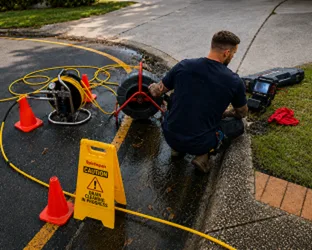
You see what failed and why, and you get one fixed number covering the repair. If opening it up changes the job, you hear that then and not later.

Completed, tested, tidied, and documented where NSW requires a compliance certificate for the work carried out.
Send it through and you will get a call from a tradesperson rather than a sales team, with an honest read on whether it can wait.
Licensing, pricing, timing and the things worth asking before anyone starts.

Phone is quickest. The form works just as well, and it reaches the crew covering Fairfield Heights rather than a national call centre.

Leave your details and our local Fairfield Heights team will call you back fast.